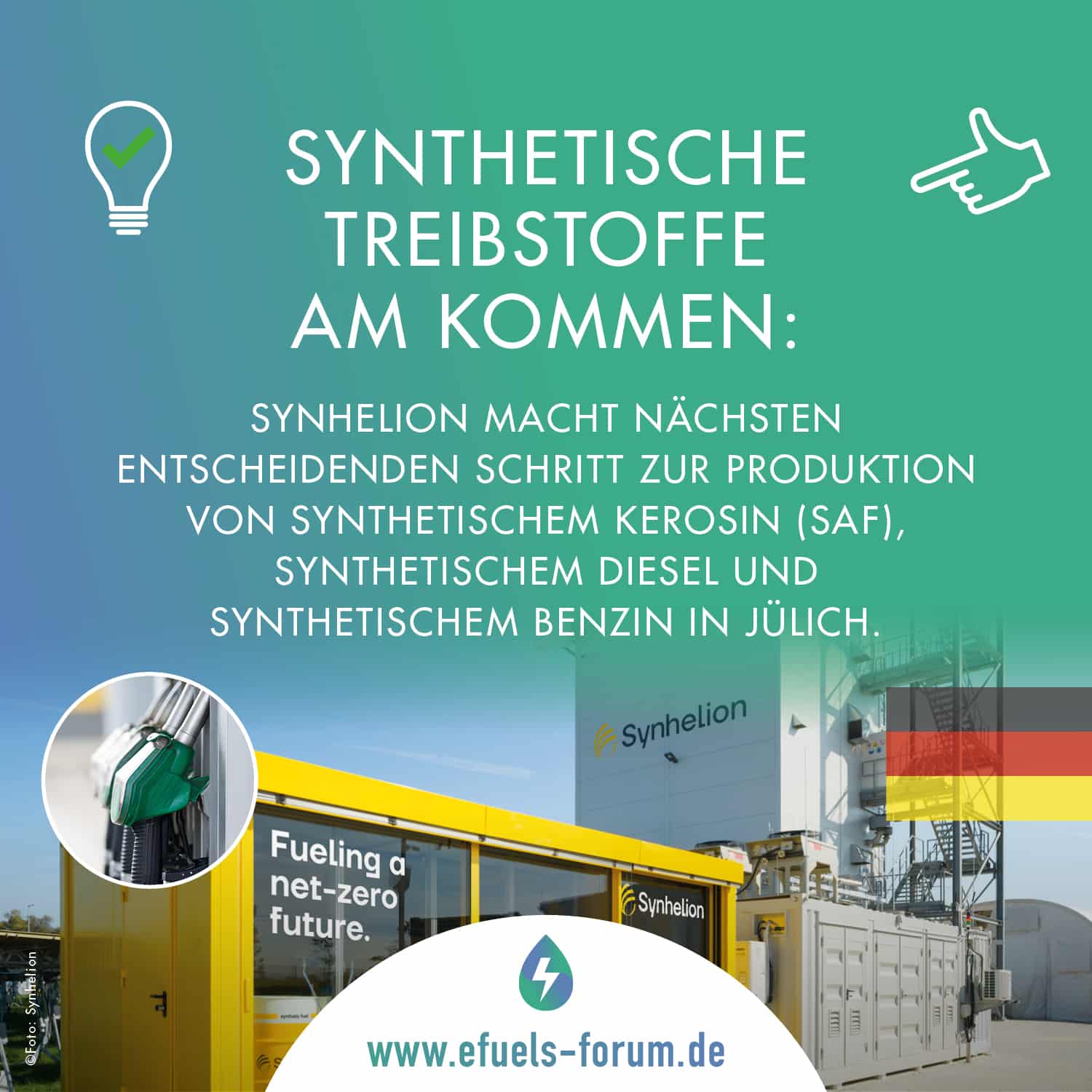
Is it really true that the industrial ramp-up of synthetic fuels isn’t making any progress—as critics and some media outlets often claim?
Of course: YES!
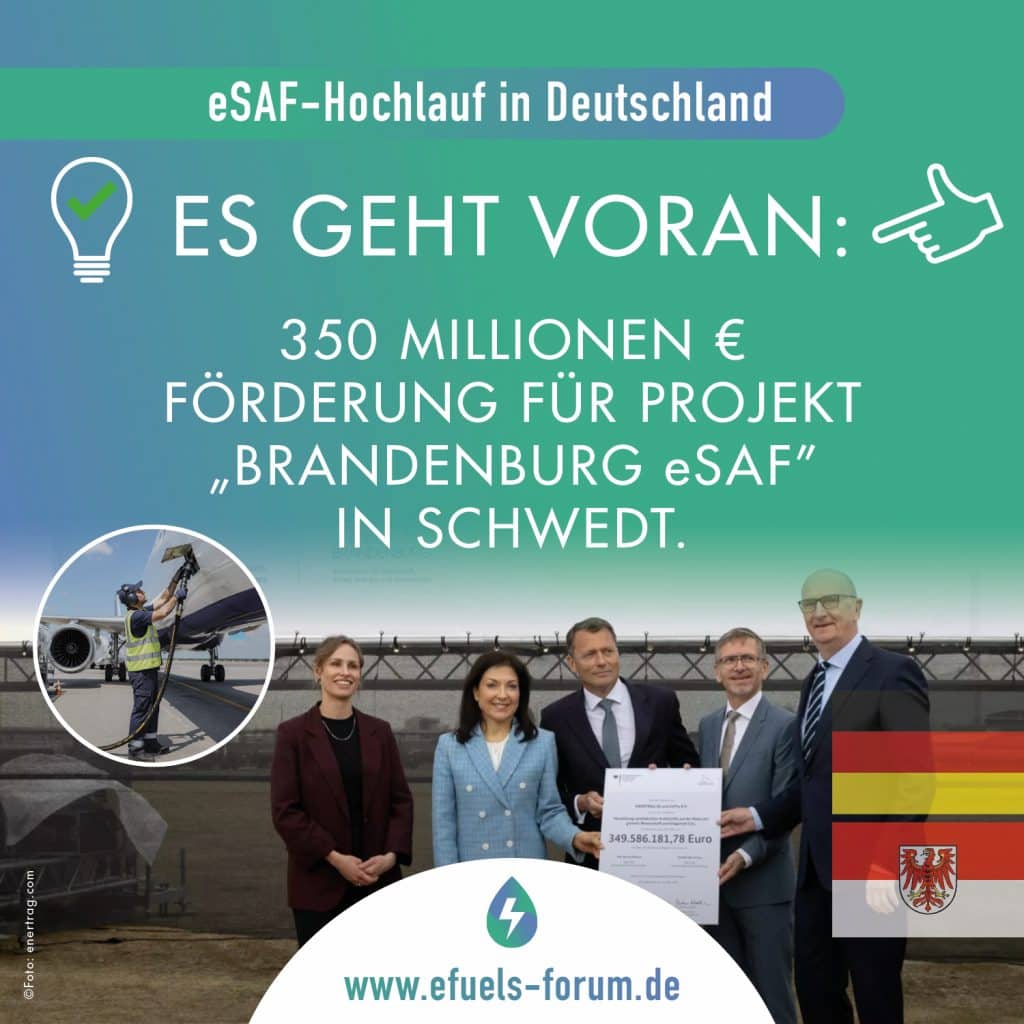
For example, Federal Minister of Economic Affairs Katherina Reiche and Minister President Dietmar Woidke presented a grant award letter for the “Brandenburg eSAF” project in Schwedt back in mid-May—this is a milestone for eSAF made in Germany!
Good to know:
Overall, Germany’s largest facility for the production of Sustainable Aviation Fuel (SAF) is receiving a total of 245 million euros in federal funding and 104 million euros in state funding from the state of Brandenburg. The total investment for the project amounts to more than 500 million euros.
With this investment, ENERTRAG and Zaffra are building Germany’s largest industrial-scale production facility for power-to-liquid aviation fuels (PtL-SAF or eSAF) on the grounds of the PCK refinery.
More facts and figures about the project:
With an annual production capacity of at least 30,000 metric tons, “Brandenburg eSAF” will produce a good quarter of Germany’s eSAF demand starting in 2030, as mandated by the ReFuelEU Aviation Regulation.
Using hydrogen produced from green electricity and biogenic CO₂, the plant uses the Fischer-Tropsch process to produce aviation fuels that, according to the company, generate more than 90 percent fewer new CO₂ emissions compared to fossil fuels.
The project will create about 150 skilled jobs at the site, and up to 1,500 jobs will be created in the region during the construction phase. Renewable business models, climate policy, and established industrial structures all come together here to strengthen Schwedt, a location with a long industrial tradition, according to a press release from ENERTRAG.