
Energy efficiency of eFuels in context: Why efficiency is not enough for a meaningful assessment
Efficiency of eFuels in context: Why it is not decisive for the efficiency assessment
The transition to modern mobility is one of the greatest challenges of our time. Modern approaches such as eFuels often attract criticism, particularly because of their supposedly low efficiency. But is the efficiency of eFuels really so poor when assessed holistically over their life cycle? And is the efficiency of synthetic fuels necessarily the decisive criterion?
We explore these issues, the role eFuels play in a sustainable energy system and how co-products could improve their overall balance.
Table of contents

What does "eFuel efficiency" mean and why is it being criticized?
Measurements show significant reductions in local pollutants such as nitrogen oxides (NOx) and particulates. HVO100 enables an immediate CO2 reduction of up to 90% compared to fossil diesel.
Product information: KlimaDiesel HVO100
KlimaDiesel HVO100 is a synthetic diesel fuel complying with DIN EN 15940, made from residual and waste materials. Depending on the feedstock and supply chain, its use can reduce new CO₂ emissions by up to 90% over the entire life cycle compared with fossil diesel (determined in accordance with the Federal Office for Agriculture and Food). New CO₂ emissions are understood to mean CO₂ emissions newly released into the air through the use of fossil fuels.
Check the manufacturer’s approval for XTL.
This product claim relates to KlimaDiesel HVO100. It is not a general statement about electricity-based eFuels.

Critics argue that eFuels have a lower overall efficiency compared to the direct use of electricity in electric vehicles. They often rely on graphs and representations that are based on unrealistic and incomplete assumptions, such as industrial eFuel production in Germany, where renewable energy is produced less efficiently.
More importantly, they completely disregard the manufacturing energies of e-cars compared to combustion engines. Because an e-car still requires much more energy to manufacture than a comparable combustion engine, there is a so-called “rucksack” at the beginning of its service life. This influences the full life cycle efficiency calculated in a fair manner in different ways, depending on how much the vehicle is driven. Because the battery and electronics are indispensable components of the energy supply of such vehicles, not including them in the calculation comes close to not using a proportion of the diesel or gasoline that a combustion engine would consume in its useful life.
Why efficiency is not everything
Conversion efficiency is an important measure of energy efficiency, but it should not be considered in isolation. There are several reasons why focusing solely on conversion efficiency is too narrow and does not provide the only measure of a technology’s usefulness.
Holistic view of the energy system
A holistic view of the energy system shows that other factors can be just as important or even more decisive. It is about how technologies are integrated into the overall energy system, what synergies they enable and what role they play in the context of the energy transition and environmental protection.
Location of energy generation
The efficiency of renewable energies depends heavily on the location. Photovoltaics in sunny regions of the world or offshore wind energy are significantly more efficient.
Flexibility and storage
eFuels enable the storage and transportation of surplus renewable energy from highly efficient regions to places of consumption worldwide.
Use of existing infrastructure
eFuels can be used in existing vehicles and with existing filling stations, which reduces large investments in new infrastructure.
Decarbonization shipping & heavy load
Areas such as aviation, shipping and heavy goods traffic are difficult to electrify. eFuels offer a practicable solution for reducing new CO2 emissions.
New CO₂ emissions and the greenhouse gas balance
Here, “new CO₂ emissions” means CO₂ emissions added to the atmosphere through the use of fossil fuels. Burning carbon-containing eFuels also releases CO₂. Any potential reduction must be assessed over the entire life cycle against a specifically identified fossil reference fuel. The electricity and CO₂ sources, production, transport and use are particularly important. A CO₂ cycle alone does not demonstrate climate neutrality.
Criticism of “eFuels efficiency” is often based on simplified considerations that only focus on the conversion losses between electricity and fuel. In addition to full life cycle analyses, e.g. for vehicles, a holistic view of the energy system shows that other factors such as integrated processes can significantly increase the efficiency of the overall system by combining various chemical and energy processes in a closed cycle.
How do integrated processes increase eFuels efficiency?
- Energy optimization within the processes:
Integrated processes make efficient use of the energy generated during CO2 capture, electrolysis and synthesis. For example, the process waste heat is fed directly back into the next production step or made available for external applications, thereby minimizing energy losses. - Coupling of processes:
The combination of different process steps (e.g. CO2 capture and synthesis) in one plant reduces transportation losses and lowers the overall energy requirement. - System integration in the energy transition:
Integrated processes create synergies between the energy sector (electricity), industry and transport by storing surplus renewable energy and using it in different applications.

Efficiency in the context of global resources
Efficiency is particularly relevant when there is a shortage of a resource. However, there is no shortage of renewable energy worldwide. The German Aerospace Center (DLR ) shows that a relatively small area with solar parks would be sufficient to cover the entire energy requirements of Germany or even the Earth.
The efficiency of eFuel production is strongly influenced by the location and the processes used. Regions with an abundance of renewable energy, such as windy countries (e.g. North Sea countries) or sunny regions (e.g. the Sahara desert), offer optimal conditions for resource-efficient eFuel production.
Co-products improve the overall balance
What are co-products?
eFuels are produced using processes such as Fischer-Tropsch synthesis or the methanol-to-gasoline process. This inevitably produces several products at the same time – so-called co-products. In addition to the main product eFuel, valuable by-products such as eKerosene, eDiesel and eBenzine are produced, which can be used in various areas. Other co-products are also created, which are required for a wide range of industries and processes. This increases the overall efficiency and profitability of eFuels.

The role of eKerosene as a co-product
Technical co-production: In the production of synthetic fuels, it is technically unavoidable that eKerosene is produced alongside ePetrol and eDiesel. This co-product can be used in aviation and contributes to the decarbonization of aviation.
Synergies between modes of transport: The joint production of eFuels for road, air and sea makes it possible to make production more efficient and reduce costs. Investments in eFuel plants benefit from the marketing of all co-products.
Examples of co-products
Oxygen: In addition to hydrogen, the electrolysis of water also produces oxygen, which can be used in medicine, metallurgy or water treatment.
Heat energy: Waste heat from synthesis processes can be used to heat buildings, in district heating networks or for industrial processes.
Chemical raw materials: CO2-based processes can supply a large number of indispensable raw materials and innovative materials for the chemical industry.
The role of eFuels in the energy transition
Early investors in the production of eFuels and RFNBOs (renewable fuels of non-biological origin) bear a high financial risk. Initial production costs are high and market conditions are uncertain.
Integration of renewable energies
The energy transition relies on a massive expansion of renewable energies. eFuels can play a key role in this. They make it possible to store surplus surplus electricity from wind and solar energy in chemical form and use it when needed. This contributes to the stability of the energy system and prevents renewable energy from remaining unused or plants from having to be shut down.
Reduction of infrastructure costs
Using existing filling stations and vehicles avoids high investment costs for new infrastructure. This accelerates the transition to future-ready technologies and makes them more economically attractive.
Global perspective
eFuels can be produced in regions with high renewable energy potential and transported worldwide. This promotes international energy partnerships and contributes to global decarbonisation. Countries with surplus renewable energy, such as Chile or Morocco, can export their resources, also contributing to economic development in these regions.
Practical examples and projects
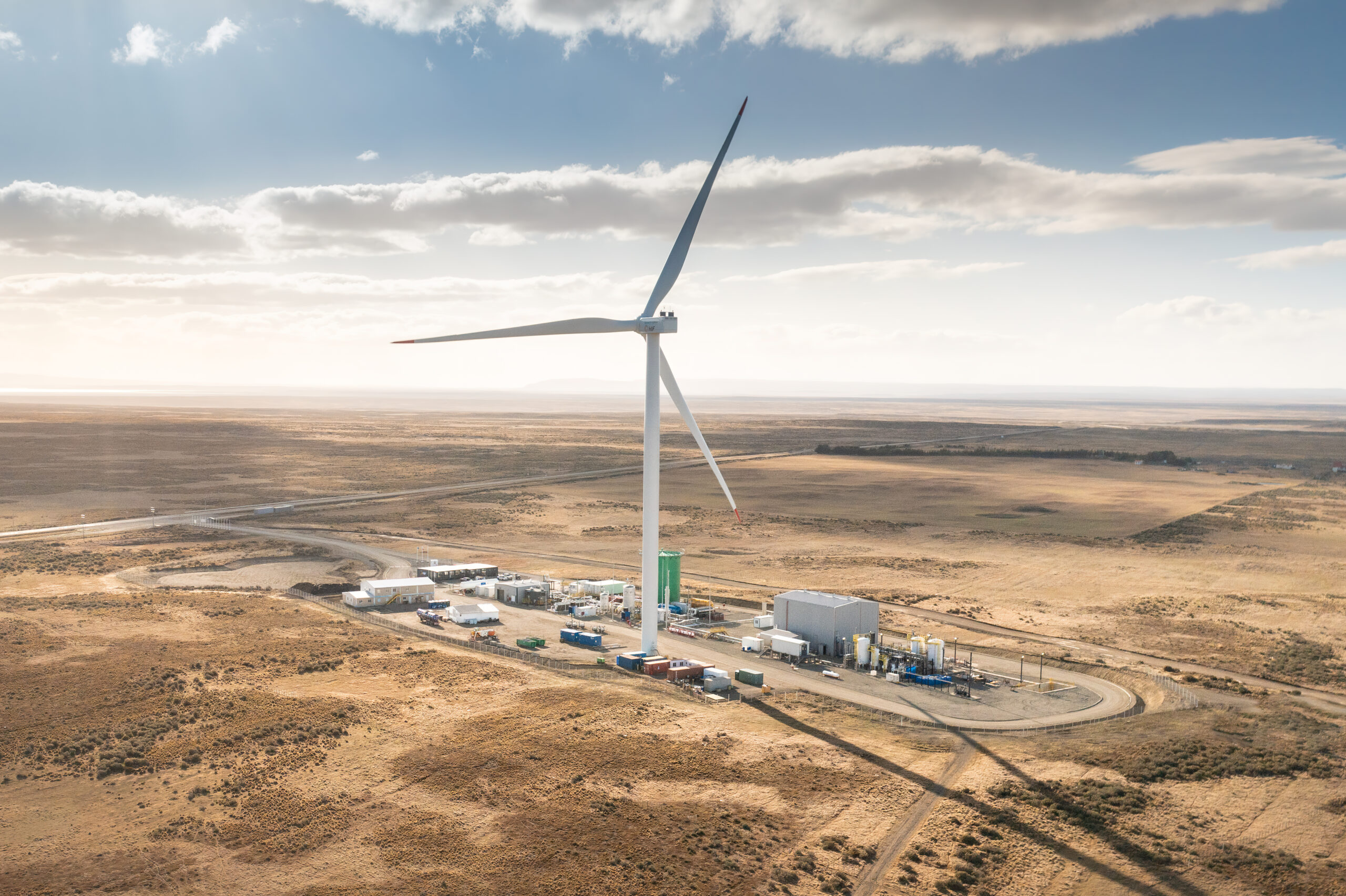
Haru Oni project in Chile
A pilot plant for the production of eFuels is being built in the windy region of Patagonia, in which companies such as Siemens Energy and Porsche are involved. In addition to eFuels, the oxygen produced during electrolysis will be used, and the waste heat from the process will be used for local energy supply. This project demonstrates the practical implementation of eFuel production and the use of co-products to increase efficiency.

Project Mosjøen
eFuel plant in Norway
Norsk e-Fuel is building its first industrial eFuel production plant in the municipality of Vefsn in northern Norway. The Mosjøen project will have a production capacity of 50 million liters of renewable fuel per year. The plant is designed to produce mainly eKerosene for the aviation industry from hydropower, with the remainder being used as eNaphtha in the chemical industry.
The company is also planning two further plants in Norway and Finland.

eFuel plant from CAPHENIA in Frankfurt-Höchst
The Bavarian clean-tech company CAPHENIA is developing a production plant for the manufacture of renewable synthetic fuels in the Frankfurt-Höchst industrial park. The central element of the plant is a specially developed reactor with patented plasma Boudouard technology (PBR). The plant is scheduled to go into operation in the first half of 2025 and is expected to produce around 500 tons of renewable synthetic fuels per year.
Critical consideration of efficiency
eFuels efficiency: Efficiency comparison with other energy sources
While electric vehicles are more efficient in vehicle operation, factors such as the efficiency of energy generation, the environmental impact of battery production, raw material extraction and disposal must also be taken into account. In addition, the use of renewable energies in Germany is less efficient than in sunny and windy countries.
The relevance of the efficiency of synthetic fuels in the context of
Conversion efficiency is less critical when renewable energy is abundant. The overall efficiency of eFuels can be comparable to that of electric vehicles when the entire energy supply chain is considered.
Conversion efficiency is an important factor, but not the only criterion for assessing energy carriers. eFuels offer considerable advantages through their flexibility, storability and the use of co-products. They enable renewable energy to be used efficiently, reduce infrastructure costs and promote global energy partnerships. A holistic view of the energy system shows that eFuels are a valuable component of a modern energy mix and can make a significant contribution to decarbonisation.
Frequently asked questions (FAQ) about the efficiency of eFuels
Efficiency is only one aspect and must also take into account the production of an object under consideration in a fair assessment. From a holistic perspective, which takes into account the high efficiency of renewable energy generation in suitable regions and the use of co-products such as eKerosene, the overall efficiency of eFuels is comparable to that of electric vehicles. The advantages of eFuels, such as storage capacity, use of existing infrastructure and decarbonization of sectors that are difficult to electrify, make them an important addition to the energy mix.
The large-scale storage and distribution of hydrogen is technically complex and expensive, as it has to be cooled and stored under high pressure. eFuels are produced from low-compression hydrogen, have a higher volumetric energy density at “normal” temperatures and pressures, and can be stored and distributed more easily and efficiently.
Co-products such as eKerosene, oxygen and thermal energy can be sold or used, generating additional revenue and increasing overall energy efficiency.
With increasing production, technological advances and economies of scale, the production costs of eFuels will fall. Political support and investment can accelerate this process.
Newsletter registration
Notes on data protection
Our free newsletter informs you regularly by e-mail about new products and special promotions. The data you enter here will only be used to personalize the newsletter and will not be passed on to third parties. You can unsubscribe from the newsletter at any time or revoke your consent at any time by sending an e-mail to . Your data will be deleted within 2 months after you stop receiving the newsletter, provided that there are no statutory retention obligations to the contrary. By submitting the data you have entered, you consent to the data processing and confirm our privacy policy.

